


Customer-specific customization
Building on our "toolbox" of modular series systems, we can flexibly adapt branding, features and case design for you.
Full custom design
Solutions – tailored for your project's success:
We work with you to quickly and easily develop systems and solutions that meet your exact requirements.
System adaptation and development
Overview of our range of services

Branding
Each system can be designed according to your specifications, from adding your logo and labeling interfaces to using color anodized front and back panels.
Our standard method for branding and marking is laser engraving. We offer this service without a minimum order quantity.
Furthermore, through our partner network we can also produce screen or digital printing in color for you.

Hardware
TX-Team systems are not "off the shelf" products; they are developed in-house from scratch. This ensures that they possess the optimal characteristics for their respective applications.
We provide this development expertise and capacity, as well as our manufacturing capabilities, for you to find the perfect solution for your individual application.
Mechanics
Based on your requirements or specifications, we create CAD designs as a starting point for possible simulations as well as the production of housing, cooling components and holding fixtures.
Many of these components are manufactured with our in-house CNC machines.
PCB layout
If the system design requires a custom PCB layout, it is often advantageous to develop the design as a single-board solution. Subsystems, such as DC-DC converters, GPIO circuits, (isolated) RS422/485 controllers, etc., then become an essential component of the system board.
Therefore, we also work according to the modular principle here: individual circuit components or entire functional blocks can be incorporated into a new design. This allows us to implement your requirements quickly and precisely.
Electromechanics
Good cooling is one of the most important factors when it comes to reliability and maintenance-free operation.
Passive heat pipe cooling systems are our core competency. But high-performance and extremely low-maintenance systems with forced ventilation or liquid cooling are also possible.
Software
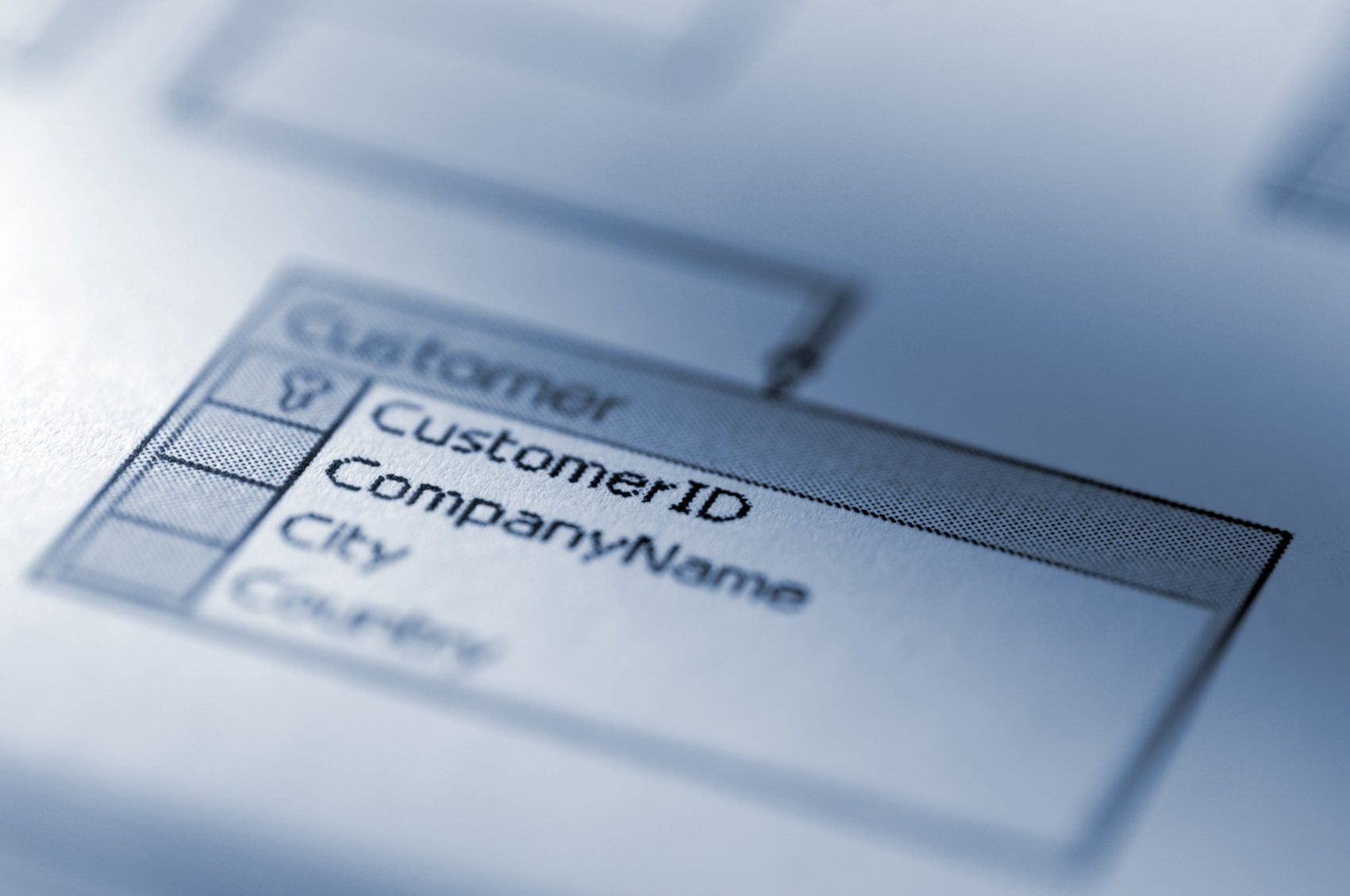
Hardware-level software
Microcontroller-controlled systems can be added for status monitoring or control functions.
UEFI/BIOS
If required, we will adapt the UEFI to your requirements, create individual boot screens and store customer-specific data (in the SMBIOS).
Operating system
Our service also includes testing your software and required operating system for interoperability with the target hardware, and, if necessary, creating images for later deployment. This ensures that your system arrives at your site ready to use.
Testing
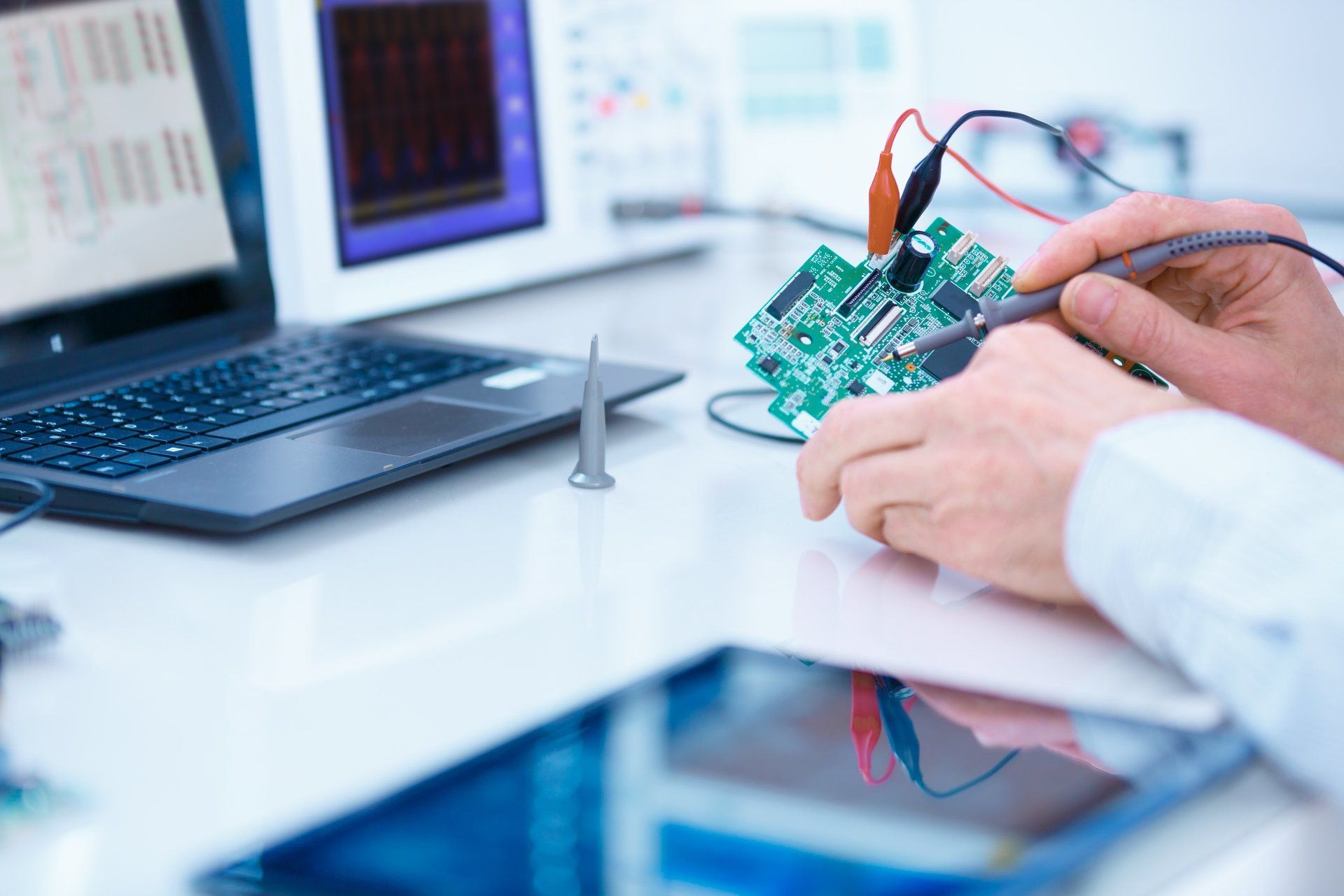
Closely linked to our quality management system according to ISO9001:2015, there are detailed test plans for pre-series and series systems.
While physical variables are measured, compared, and logged in our in-house electronics lab, we use various tools at the logical level. These include, among others, Passmark's "Burn-In".
For testing under extreme conditions, our laboratory also has a climate chamber.

Compliance
In addition to the mandatory CE certification, we offer testing for international market approvals through accredited laboratories.
In addition, there are industry-specific approvals for use in vehicles, railways or ships, as well as in the medical field.
Furthermore, durability tests according to MIL standards.
Reference projects
Below are brief descriptions of some client projects. We would be happy to provide further references upon request.
Security Appliance
19" Front-IO networking appliance
Problem:
Our customer needed a fanless 19" system for 1.5U. The front panel required access to, among other things, three multi-gigabit LAN ports, two USB ports, and a GPIO header. The system will operate headless, but operating parameters and faults should still be immediately identifiable.
Solution:
A specially designed housing with milled side cooling fins ensures that the mechanical and thermal specifications are met.
A front I/O board brings two internally available 10G LAN ports to the front. An additional GLAN port is implemented on the I/O board using a Realtek controller. A USB controller and a circuit for the galvanically isolated GPIOs are also included.
Process parameters and any error messages are displayed via an integrated display.
Visualization solution
18.5" industrial display with optional I/Os
Problem:
A customer in the mechanical engineering sector requires an HMI for control and visualization tasks. Different configuration options for the operating elements must be taken into account.
The solution must fit into an existing control cabinet.
The system must be IP65-protected on all sides.
Solution:
The same touch panel we use for the ITP series is flush-mounted in a custom-made aluminum front panel. This front panel can accommodate up to eight controls or connections (emergency stop, key switch, push buttons, USB ports, etc. from the Eaton M22 series). These components are installed according to the specific order.
The enclosure is a standard IP65-protected enclosure, which is provided by the customer and is also fully assembled/wired at the customer's site.
Fanless desktop for the highest demands
Screwless design PC with IP54 protection
Problem:
Our customer required a fanless system that meets the highest standards not only in terms of functionality but also in terms of appearance.
Furthermore, the device should be protected against splashing water on five sides according to IP54.
Solution:
The IM series serves as the basis. Surface gaskets, laser-cut from EPDM, are fitted at the housing joints. The front panel is milled from 5mm aluminum plates and clear anodized. Assembly is done internally, so no screw heads are visible from the outside.
A 19mm diameter ring LED in dimmed blue serves as a power indicator.
Multinode Server
19"/4HE Server with nine nodes
Problem:
The requirement was for a system so densely populated that nine compute nodes could fit into a 4U short rack system (250 mm deep). The temperature range and lifespan were to be significantly higher than those of conventional multinode systems.
Solution:
Based on our fanless I4U1000, we developed a system equipped with nine industrial PC nodes. Each node can be equipped with up to 64GB of RAM and Intel Core i9 CPUs. A high-performance cooling system utilizes eight 80mm high-end fans, generating front-to-back airflow and a slight overpressure within the system.
INDUSTRIAL AI SYSTEM
The robust 19" system uses an nVidia GPU
Problem:
The requirement was for a 19" system that could be cooled without a fan, despite a powerful CPU and Nvidia GPU. The cooling fins had to be located at the top of the device.
The entire system must achieve at least protection class IP54 and be able to withstand vibrations such as those that occur in vehicles.
The integrated DC-DC converter with wide-range input must have galvanic isolation to prevent fault currents.
A fixed BOM in the context of long-term availability is also an important requirement.
Solution:
The housing and cooling technology were completely redesigned for this application.
All connections on the back are designed as IP67 screw connections.
Milled grooves for seals at all housing transitions ensure splash water protection.
The DC-DC converter is also a new design, as galvanically isolated converters in the required power class are not available off-the-shelf.
All components are mechanically fixed or screwed to the housing and some are additionally glued.
Availability is ensured through the stockpiling of critical components and long-lasting parts.
FAQ
Frequently asked questions about hardware customization and new development
Get in touch
Have we sparked your interest?
Learn more about how we can support you with your project!

Request a quote
Receive your non-binding offer
- quick and easy!
Request test system
Test your target hardware directly with your application and in the intended environment.
We would be happy to provide you with a test unit - free of charge and without obligation!
Make an appointment
By phone, in writing or in person - we are at your service: